.
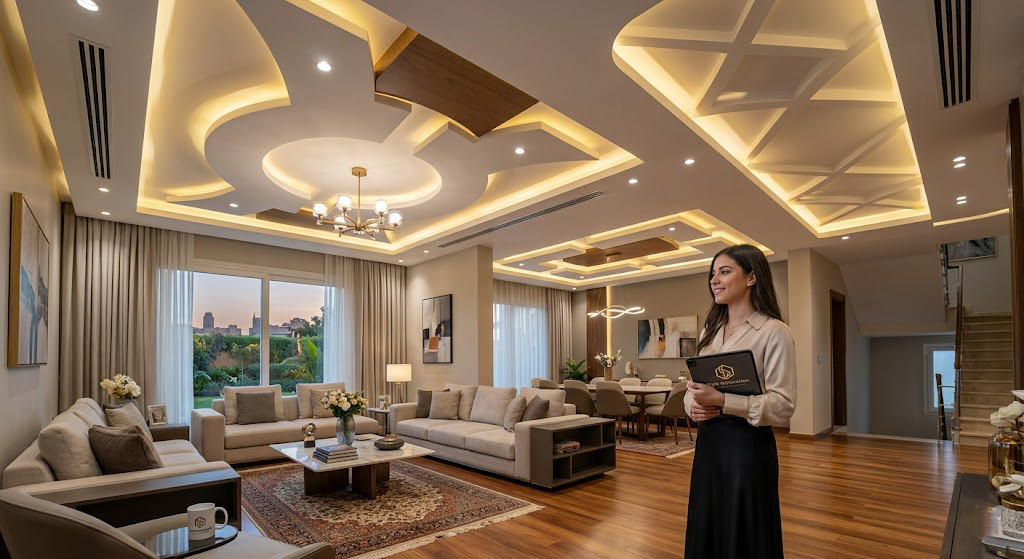
A suspended ceiling — also known as a drop ceiling or false ceiling — is a secondary ceiling installed below the main structural ceiling of a building. It is attached using a system of metal hangers and frames, leaving a concealed gap between the two surfaces.
Unlike traditional exposed ceilings, suspended ceilings create a hidden cavity used to run electrical wiring, air conditioning ducts, plumbing, and network cables — resulting in a clean, professional finish for any space.
Suspended ceilings allow for a wide variety of design styles — from sleek minimalist layouts to ornate multi-level designs — significantly enhancing the visual appeal of any interior.
Instead of exposed pipes and wires, suspended ceilings neatly hide all building services while still allowing easy access for maintenance or future modifications.
Recessed downlights, LED strip lighting, and indirect lighting can all be seamlessly integrated into suspended ceilings, enabling precise control over light distribution and ambiance.
Certain suspended ceiling materials provide effective acoustic and thermal insulation, reducing noise levels and helping to lower energy consumption.
Unlike solid ceilings, suspended ceilings allow technicians to quickly access concealed utilities without the need for costly demolition work.
The most popular choice for residential spaces. Gypsum board ceilings offer exceptional design flexibility, allowing curved shapes, geometric patterns, and multi-level designs.
Best for: Living rooms, bedrooms, private offices.
Commonly used in commercial and industrial environments. Metal ceilings are highly durable, fire-resistant, and easy to replace panel by panel if damaged.
Best for: Corporate offices, shopping malls, hospitals.
Made from specially treated materials that resist steam and humidity, these ceilings are the go-to solution for wet environments.
Best for: Kitchens, bathrooms, indoor swimming pools.
Feature artistic three-dimensional patterns and ornamental details that make a bold visual statement in high-traffic or prestigious spaces.
Best for: Hotels, upscale restaurants, reception halls.
Prices vary depending on material type, design complexity, and location. Below is a general cost guide:
| Type | Average Cost per m² |
|---|---|
| Standard gypsum board | $15 – $30 |
| Moisture-resistant gypsum board | $20 – $40 |
| Metal tile ceiling | $25 – $55 |
| Decorative 3D ceiling | $45 – $90 |
Note: These are estimated ranges. Final costs depend on room size, ceiling height, finishing requirements, and labor rates in your area.
Before making a decision, consider these key factors:
Suspended ceilings are found across a wide range of residential and commercial projects, including:
A professional suspended ceiling installation follows these key stages:
How long does it take to install a suspended ceiling? For an average room of around 25 m² (270 sq ft), installation typically takes 2 to 4 days depending on design complexity and the number of workers on site.
Are suspended ceilings fire-safe? Yes. Fire-resistant variants are available, manufactured from specially rated materials that comply with building safety standards.
Can suspended ceilings be installed in rooms with low ceilings? Yes, provided the ceiling height is at least 2.7 meters (approximately 9 ft). In such cases, flat, minimalist designs are recommended.
What is the difference between standard and moisture-resistant gypsum board? Moisture-resistant gypsum board (typically green-faced) contains additives that inhibit mold growth and prevent water absorption, making it suitable for high-humidity environments.
Can I modify a suspended ceiling after installation? Absolutely. Adding new light points, repositioning air vents, or updating the design is far simpler and more affordable with a suspended ceiling than with a traditional solid ceiling.
Suspended ceilings are far more than a decorative feature — they are a complete functional solution that combines aesthetics with practical performance. Whether you are fitting out a home, an office, or a commercial venue, choosing the right type and working with experienced professionals makes all the difference.
For a tailored consultation and a design that suits your space and budget, contact the Style Decoration team at: Styledecoration.com.eg
Last updated: 2025