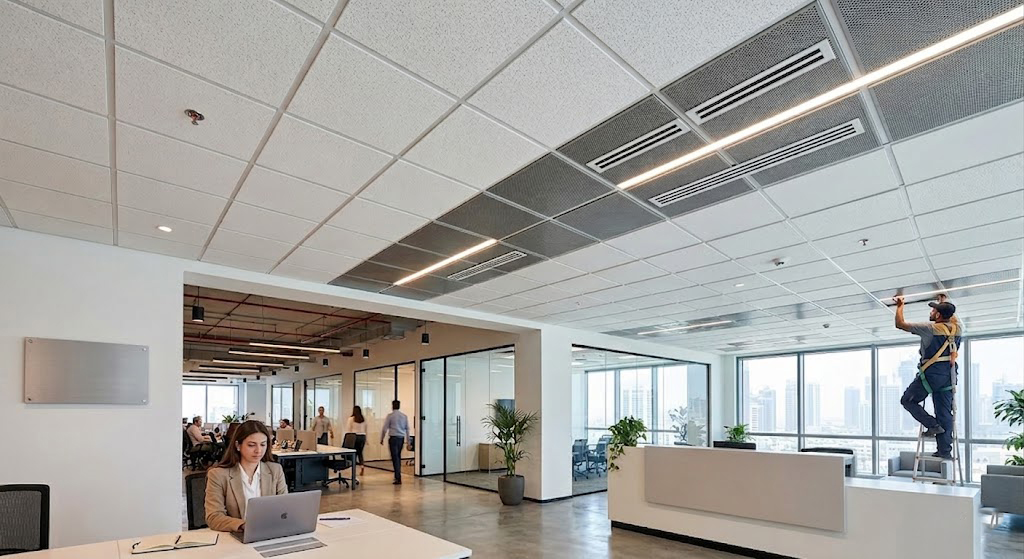
Discover the types of suspended ceiling tiles, their benefits, pricing, and expert tips for choosing the right option for your project. A comprehensive guide from Style Decoration specialists.
In the world of modern interior finishing, suspended ceiling tiles have become one of the most in-demand solutions across Egypt and the Arab region. Whether you're building an administrative office, equipping a hospital, or renovating your home, a suspended ceiling delivers three benefits at once: a professional appearance, effective acoustic insulation, and easy access to hidden utilities.
In this guide, we cover everything you need to know before making a purchase or installation decision.
Ceiling tiles are panels installed within a metal grid suspended from a building's original structural ceiling. They serve multiple purposes, including:
These tiles are available in common standard sizes such as 60×60 cm and 60×120 cm, and in a variety of materials to suit every budget and application.
One of the most widely used types in residential and administrative projects. Known for their elegant appearance and ability to be painted in a wide range of colors.
Pros: Refined look, easy to shape, suitable for both classic and contemporary interiors. Cons: Susceptible to heavy moisture unless the water-resistant variant is used. Best for: Offices, hotels, apartments, and villas.
Made from aluminum or galvanized steel, these tiles are widely used in commercial and industrial projects.
Pros: Extremely durable, fire-resistant, unaffected by moisture. Cons: Higher cost compared to other types. Best for: Factories, restaurants, shopping malls.
A popular budget-friendly option, especially for projects with limited budgets or high-humidity environments.
Pros: Very lightweight, excellent water resistance, easy to clean and replace. Cons: Less durable than gypsum or metal; some low-cost varieties may yellow over time. Best for: Bathrooms, kitchens, storage areas.
Considered the highest-performing type for acoustic insulation, making them the top choice for educational and medical facilities.
Pros: Sound absorption coefficient (NRC) of up to 0.95, good moisture resistance. Cons: Sensitive to direct pressure and may crack if handled roughly. Best for: Hospitals, schools, conference rooms, recording studios.
| Type | Durability | Acoustic Insulation | Moisture Resistance | Relative Cost |
|---|---|---|---|---|
| Gypsum | Good | Moderate | Moderate | Low |
| Metal | Excellent | Good | Excellent | High |
| PVC | Acceptable | Poor | Excellent | Very Low |
| Mineral Fiber | Good | Excellent | Good | Moderate |
1. Professional Concealment of Utilities A suspended ceiling neatly hides electrical cables, HVAC pipes, and communication networks — while allowing instant access to any of them by simply lifting a single tile.
2. Improved Energy Efficiency A suspended ceiling reduces the volume of conditioned air space, which can lower energy consumption by 10% to 20%, according to energy efficiency studies.
3. Effective Acoustic Insulation In workplace environments, acoustic insulation contributes to higher employee productivity. Research in acoustic ecology indicates that reducing background noise by 10 decibels produces a measurable improvement in concentration.
4. Easy Maintenance and Replacement Unlike fixed ceilings, any damaged tile can be replaced independently without demolition or repainting work.
5. Aesthetic Variety Ceiling tiles are available in designs ranging from plain to textured to perforated, giving interior designers wide creative freedom.
Before making a purchase decision, ask yourself:
Q: What is the difference between a suspended ceiling and a gypsum board ceiling? A: A suspended ceiling (tile system) allows easy access to utilities by lifting tiles, whereas a gypsum board ceiling is permanently fixed and requires cutting access holes for maintenance.
Q: How long does ceiling tile installation take? A: For medium-sized spaces (50–100 m²), professional installation typically takes one to two working days, depending on design complexity and the number of utilities involved.
Q: Can ceiling tiles be installed in bathrooms? A: Yes, but you must choose a moisture-resistant type such as PVC or mineral fiber tiles with a protective coating.
Q: What is the expected lifespan of ceiling tiles? A: High-quality tiles typically last 15 to 25 years under normal usage conditions.
Q: Are ceiling tiles fire-resistant? A: Most mineral fiber and metal tiles carry a Class A fire resistance rating. Always verify the product's certification before purchasing.
Style Decoration offers a comprehensive range of ceiling tiles for all project types, backed by a specialized engineering team that handles consultation, supply, and installation. Services include:
To inquire or request a quote, visit Styledecoration.com.eg
Choosing the right ceiling tiles is not merely an aesthetic decision — it is a functional investment that affects a space's comfort and operating costs for years to come. Start by identifying your actual needs in terms of acoustic insulation, moisture resistance, and budget, then select the most suitable type with the help of a specialist.